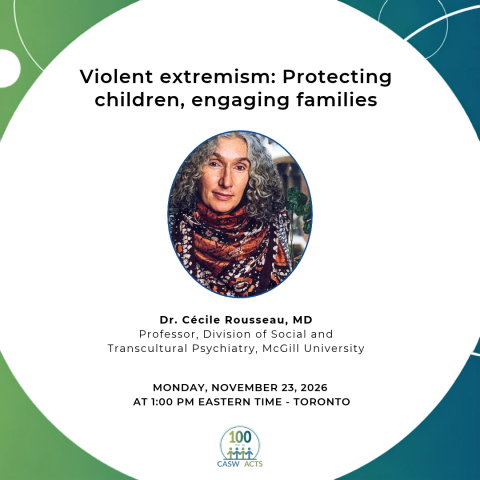
Children and families are increasingly affected by violent extremism and social polarization, raising complex clinical, ethical, and legal challenges for social workers and other helping professionals. Children of parents involved in extremist movements may experience psychological distress, trauma, disrupted attachments, loyalty conflicts, and social isolation, while their needs often remain overlooked or misunderstood. Drawing on clinical research and case studies involving children exposed to different forms of extremism, this webinar will examine the developmental and psychosocial consequences of parental radicalization, as well as the challenges of balancing child protection, family relationships, and individual rights. The presentation will also explore the critical role of families in supporting youth at risk of violent radicalization. Particular attention will be given to the impact of stigma, family dynamics, and individuation-separation processes on youth vulnerability and disengagement. Through a systemic, developmentally informed, and family-centered perspective, participants will gain insights into the ethical dilemmas faced by social workers and the importance of interdisciplinary collaboration in protecting children while engaging and supporting their families.
By the end of this webinar, participants will be able to:
1. Identify the potential psychosocial and developmental impacts of parental extremism on children, including trauma, attachment difficulties, loyalty conflicts, and social isolation.
2. Examine the clinical, ethical, and legal dilemmas involved in protecting children exposed to extremist ideologies while respecting family relationships, parental rights, and children's best interests.
3. Recognize the complex role of family dynamics, stigma, and individuation-separation processes in youth vulnerability to violent radicalization and disengagement.
4. Explore systemic, developmentally informed, and family-centered approaches that social workers can use to engage families, support at-risk youth, and promote child protection and resilience.