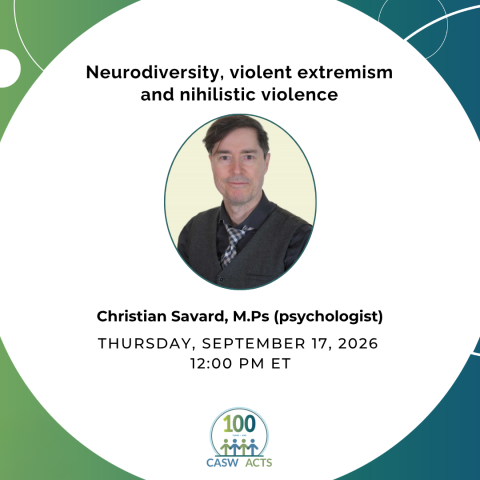
This presentation explores the complex relationship between neurodiversity, violent extremism, and nihilistic violence, with a particular focus on autism and other neurodevelopmental conditions. Drawing on clinical experience from the Montreal Polarization Clinical Team, participants will gain an understanding of how factors such as social exclusion, bullying, trauma, grievances, online influences, and unmet support needs can contribute to vulnerability in a small subset of neurodivergent individuals, while avoiding stigmatizing assumptions about neurodiversity itself. The presentation will examine challenges related to risk assessment, including the potential for false positives when using threat assessment frameworks, and will discuss how neurodiversity can influence interactions with law enforcement, the judicial system, and prevention programs. Through clinical examples and case studies, participants will also learn about multidisciplinary intervention strategies that reduce psychological distress, strengthen protective factors, and support disengagement from pathways toward violence.
Webinar Key Objectives:
- Increase awareness about the specific presentation of neurodivergent people and how they might get involved in EV and NEV
- Present a summary picture of the interactions of neurodivergent people and different aspect of the security and judicial system
- Present an introduction to how CVE clinical teams might reduce long term risks of violence.
- Describe the contributions that social workers may have in the follow-up of neurodivergent people who are fostering ideas of ideological or nihilistic violence.